5 Social Media Mistakes That Can Ruin Your Personal Injury Settlement
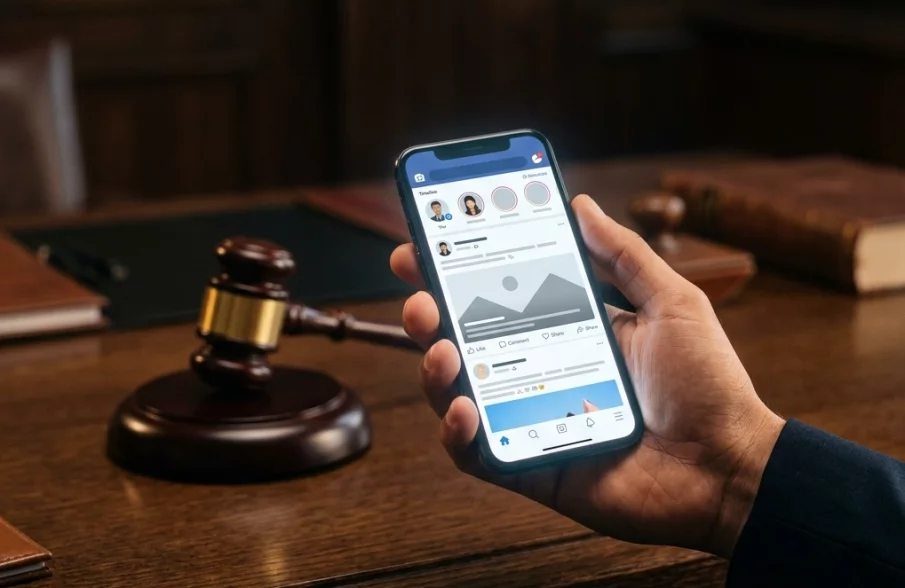
You probably do not think twice about posting a photo on Instagram, checking in at a restaurant on Facebook, or tweeting about your weekend plans. Social media is such a natural part of daily life that most people never consider how it could be used against them.
But if you are in the middle of a personal injury case, every single thing you post online can, and likely will, be scrutinized by the insurance company. And what they find could significantly reduce your settlement or even destroy your claim entirely.
This is not an exaggeration. Insurance companies routinely monitor claimants' social media profiles as part of their investigation process. They are looking for anything that contradicts your injury claims, and they are often very good at finding it.
Here are five social media mistakes that can seriously damage your personal injury case, and what to do instead.
Mistake #1: Posting Photos or Videos of Physical Activity
You claim you have debilitating back pain that prevents you from working. Then the insurance company's investigator pulls up your Instagram and finds a video of you dancing at your cousin's wedding. Or a photo of you carrying grocery bags. Or a picture of you at the beach.
Even if those activities caused you pain and you spent the next three days in bed recovering, the insurance adjuster does not know that. All they see is a photo that seems to contradict your claim. And they will use it.
Why this matters: Insurance companies do not need to prove that your injuries are fake. They just need to create enough doubt to justify a lower settlement offer, or to convince a jury that your injuries are not as bad as you say.
What to do instead: Avoid posting any photos or videos that show you engaging in physical activity, attending events, or doing anything that could be interpreted as inconsistent with your claimed injuries.
Mistake #2: Discussing Your Case or Accident Online
It might feel natural to share the details of your accident with friends and family on social media. Maybe you post about how the accident happened, how frustrated you are with the insurance company, or how much money you are expecting in your settlement.
Every one of these posts is potential ammunition for the opposing side.
Here is how it can backfire:
- Describing the accident in your own words could contradict what you told your attorney, the police, or the insurance company, even if the differences are minor
- Complaining about the insurance company might make you look vindictive or unreasonable
- Mentioning settlement amounts or expectations could undermine negotiations
- Venting about your injuries (or lack thereof) can be taken out of context
What to do instead: Do not discuss your accident, your injuries, your legal strategy, or anything related to your case on social media. If you need to vent, call a trusted friend or talk to your attorney.
Mistake #3: Posting Emotional Updates That Contradict Your Mental Health Claims
Many personal injury cases include claims for emotional distress, anxiety, depression, or PTSD. If you are claiming that the accident left you struggling emotionally, your social media should not tell a different story.
Posts like "Best day ever!" or "Feeling blessed and living my best life!" can be presented to a jury or an insurance adjuster as evidence that your emotional suffering is not as bad as you claim. Even a simple smiley face emoji on someone else's post can be twisted to suggest you are doing just fine.
Why this matters: Emotional distress claims can be a significant portion of your settlement. Anything that undermines those claims can cost you real money.
What to do instead: Be mindful of the tone and content of everything you post and comment on. Even seemingly innocent reactions or responses can be taken out of context.
Mistake #4: Accepting New Friend Requests or Connections
During an active personal injury case, you might receive friend requests or follow requests from people you do not know. Some of these could be investigators or individuals connected to the insurance company who are trying to access your private posts and photos.
Even if your privacy settings are strict, accepting a new connection essentially gives a stranger full access to your profile content, check-ins, photos, and interactions.
Why this matters: Information obtained from social media, even through deceptive means, can potentially be used in your case. While the admissibility of evidence obtained this way varies by jurisdiction, the damage to your settlement negotiations can happen well before anything reaches a courtroom.
What to do instead: Do not accept friend requests or follow requests from anyone you do not personally know while your case is active. Review your current connections and consider restricting access for anyone you are not close to.
Mistake #5: Not Adjusting Your Privacy Settings (or Assuming They Protect You)
Many people think that setting their profiles to "private" is enough to keep the insurance company out. Unfortunately, that is not always the case.
Here is why:
- Friends can share your content. Even if your profile is private, a friend could screenshot your post, share your photo, or mention you in a public post
- Metadata matters. Even without seeing the content of your posts, insurance companies can sometimes access metadata like your location, check-ins, and timestamps
- Court orders. In some cases, courts can order you to turn over your social media content if the opposing side can argue it is relevant to the case
- Cached content. Deleted posts are not always truly gone. Cached versions, screenshots, or archived content can sometimes be retrieved
What to do instead: While you should definitely tighten your privacy settings (it helps), do not rely on them as your only line of defense. The safest approach is to be extremely selective about what you post in the first place.
The Golden Rule: When In Doubt, Don't Post
The simplest and most effective advice any personal injury attorney will give you about social media during your case is this: treat everything you post as if it will be shown to a jury.
If a post, photo, comment, or reaction could be interpreted in a way that hurts your case, do not share it. The temporary satisfaction of a social media update is never worth potentially thousands (or tens of thousands) of dollars off your settlement.
What About Deleting Old Posts?
You might be tempted to go back and delete posts that could be problematic. Be very careful with this. Depending on the stage of your case and the jurisdiction, deleting social media content could be considered destruction of evidence (known as "spoliation"). Spoliation can result in court sanctions, negative inferences, and serious damage to your credibility.
Before deleting anything, talk to your attorney. They can advise you on what is safe to remove and what you should leave alone.
Talk to Your Attorney About Social Media
If you have an active personal injury case, ask your attorney specifically about social media guidelines. A good lawyer will give you clear instructions about what to post, what not to post, and how to handle your online presence until the case is resolved.
And if you do not have an attorney yet, finding one should be a priority. You can browse our personal injury attorney directory to find experienced lawyers in Atlanta, Las Vegas, Philadelphia, and other cities across the country.
The Bottom Line
Social media is a powerful tool, but during a personal injury case, it is also a potential minefield. Insurance companies actively monitor claimants' online activity and will use anything they find to reduce your payout. By avoiding these five common mistakes, you protect the integrity of your claim and give yourself the best chance at a fair settlement.
Remember: post less, share less, and when in doubt, do not post at all. Your settlement will thank you.
Disclaimer: This article is for informational purposes only and does not constitute legal advice. Social media policies and the admissibility of online evidence vary by jurisdiction. Consult with a qualified personal injury attorney for advice specific to your case.
More to Read:





Previous Posts: